




Prof. Dr. Markus M. Lerch, Medical Director and Chairman of the Board of the LMU Hospital, expects M1 and the Highmed Agenda Bavaria to provide central structural improvements in the healthcare system that will benefit the entire population of the Free State of Bavaria. “Digitalization, above all, has the potential to advance medicine. To this end, it is necessary to interpret the General Data Protection Regulation not in such a way as to prevent the use of health data, but to protect patients from harm caused by the misuse of their data,” Lerch demanded. “We need the data to improve the quality of healthcare and to enable medical progress in the first place. In case of an emergency, a doctor needs to know what pre-existing conditions an unconscious patient has and what medications they are taking in order to be able to help them quickly. Large health data registries also help identify rare side effects of drug combinations in order to develop better and safer medicines.”
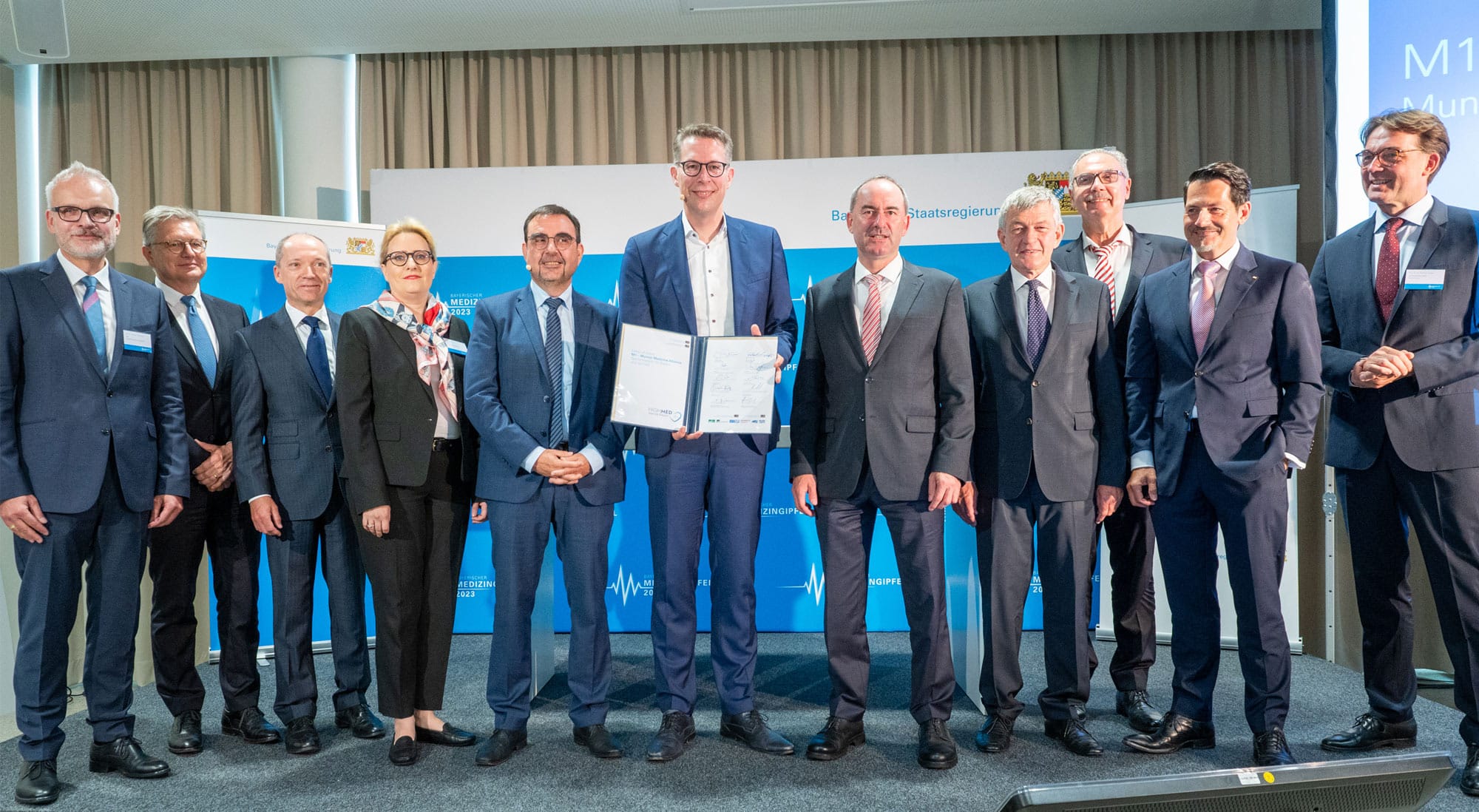
All participants at the Bavarian Medical Summit agreed with the statement that “more digitalization means more health.” However, it is now important to involve everyone in the implementation, especially the experts by experience, namely patients and their relatives.
Alongside the event, the university hospitals each presented a special research or treatment procedure. Prof. Dr. Nikolaus Haas, Director of the Department of Pediatric Cardiology and Pediatric Intensive Care Medicine, represented the LMU Hospital with a booth as head of the LMU 3D printing laboratory. He showed a video demonstrating the production and use of 3D printed heart models for research and teaching. The models in various sizes and colors, made of a range of materials, also intrigued and impressed both Ministers Blume and Holetschek on their visit.
Marchioninistraße 15
81377 München
Deutschland
claudia.berg@med.uni-muenchen.dewww.klinikum.uni-muenchen.de