



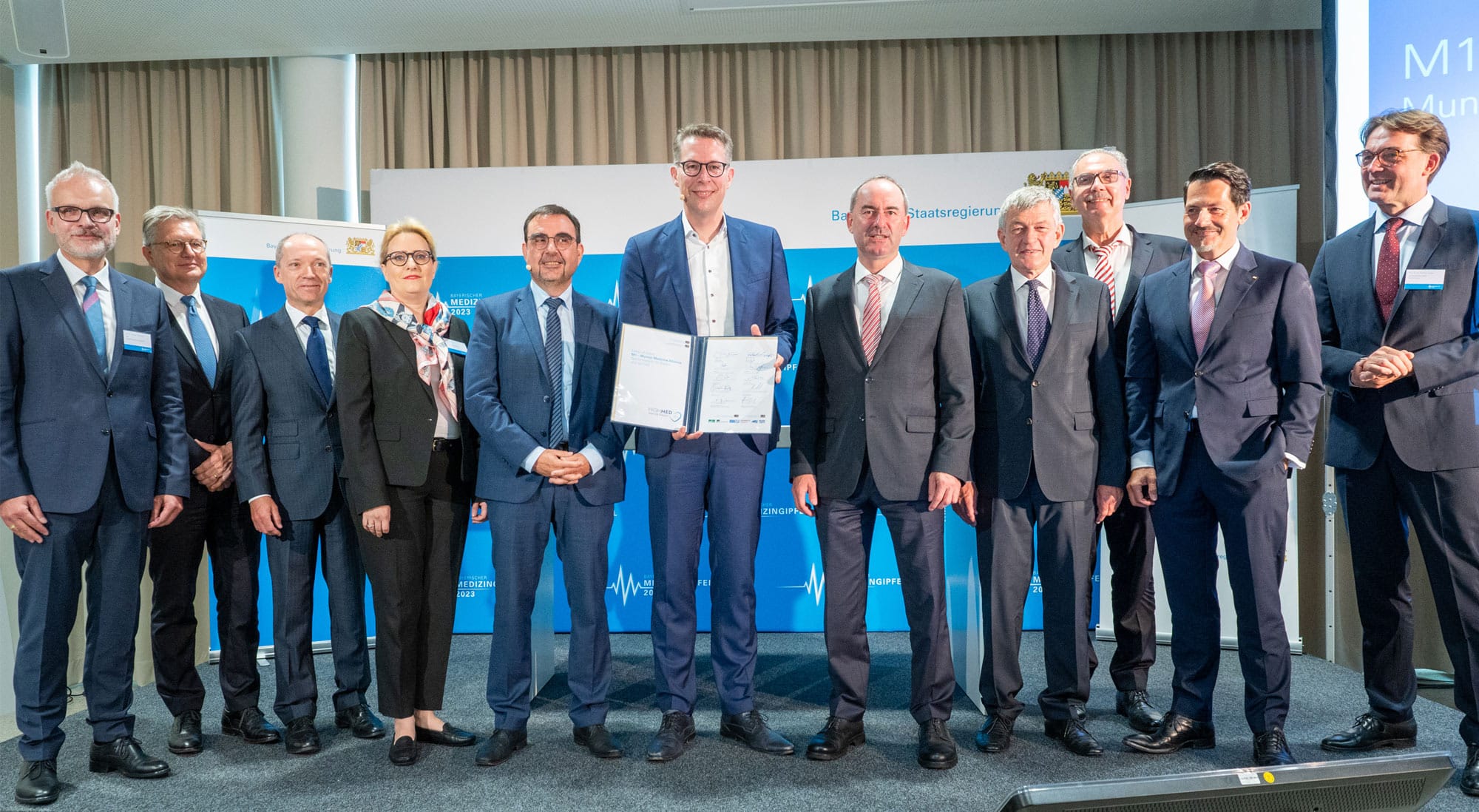
Prof. Dr. Markus M. Lerch, Ärztlicher Direktor und Vorstandsvorsitzender LMU Klinikum, verspricht sich von M1 und der Highmed Agenda Bayern zentrale Strukturverbesserungen im Gesundheitswesen, von der alle Menschen im Freistaat profitieren werden. „Vor allem die Digitalisierung kann die Medizin voranbringen. Dazu ist es notwendig, die Datenschutzgrundverordnung nicht so auszulegen, dass die Nutzung von Gesundheitsdaten verhindert wird, sondern dass Patienten vor Schaden durch den Missbrauch ihrer Daten geschützt werden“, forderte Lerch. „Wir brauchen die Daten, um die Qualität der medizinischen Versorgung zu verbessern und medizinischen Fortschritt überhaupt zu ermöglichen. Im Notfall muss ein Arzt wissen welche Vorerkrankungen eine bewusstlose Patientin hat und welche Medikamente sie einnimmt, um ihr schnell helfen zu können. Und auch bei der Erkennung von seltenen Nebenwirkungen von Medikamentenkombinationen helfen große Register von Gesundheitsdaten, um eine bessere und sicherere Medizin zu entwickeln.“
Der Formulierung, „mehr Digitalisierung ist mehr Gesundheit“, stimmten alle Teilnehmerinnen und Teilnehmer des Bayerischen Medizingipfels zu. Allerdings kommt es nun darauf an, bei der Umsetzung alle Menschen mitzunehmen, insbesondere auch Experten aus Erfahrung, also Patienten und Patientinnen und deren Angehörige.
Begleitend zur Veranstaltung präsentierten die Uniklinika jeweils ein spezielles Forschungs- oder Behandlungsverfahren. Für das LMU Klinikum war Prof. Dr. Nikolaus Haas, Direktor der Abteilung für Kinderkardiologie und pädiatrische Intensivmedizin, als Leiter des 3D Drucklabors der LMU mit einem Stand vor Ort. Dort zeigte er in einem Video die Herstellung und Anwendung von 3D-gedruckten Herzmodellen für Forschung und Lehre. Die Modelle in unterschiedlicher Größe und Farbe und aus verschiedenen Materialien interessierten und beeindruckten bei ihrem Rundgang auch die beiden Minister Blume und Holetschek.
Prof. Dr. Markus M. Lerch, Medical Director and Chairman of the Board of the LMU Hospital, expects M1 and the Highmed Agenda Bavaria to provide central structural improvements in the healthcare system that will benefit the entire population of the Free State of Bavaria. “Digitalization, above all, has the potential to advance medicine. To this end, it is necessary to interpret the General Data Protection Regulation not in such a way as to prevent the use of health data, but to protect patients from harm caused by the misuse of their data,” Lerch demanded. “We need the data to improve the quality of healthcare and to enable medical progress in the first place. In case of an emergency, a doctor needs to know what pre-existing conditions an unconscious patient has and what medications they are taking in order to be able to help them quickly. Large health data registries also help identify rare side effects of drug combinations in order to develop better and safer medicines.”
All participants at the Bavarian Medical Summit agreed with the statement that “more digitalization means more health.” However, it is now important to involve everyone in the implementation, especially the experts by experience, namely patients and their relatives.
Alongside the event, the university hospitals each presented a special research or treatment procedure. Prof. Dr. Nikolaus Haas, Director of the Department of Pediatric Cardiology and Pediatric Intensive Care Medicine, represented the LMU Hospital with a booth as head of the LMU 3D printing laboratory. He showed a video demonstrating the production and use of 3D printed heart models for research and teaching. The models in various sizes and colors, made of a range of materials, also intrigued and impressed both Ministers Blume and Holetschek on their visit.