


Auf der Netzwerkveranstaltung im Innovations- und Gründerzentrum Biotechnologie (IZB) erläuterten Player der Life Science-Branche ihre Strategie
"In den letzten 100 Jahren haben wir 30 Jahre an Lebenszeit hinzugewonnen. Wie wäre es, wenn wir die nächsten 30 Jahre an Lebenszeitzugewinn in nur halb so viel Zeit erreichen, so Chantal Friebertshäuser, Geschäftsführerin MSD Deutschland. "Dafür brauchen wir aber nichts weniger als einen Kulturwandel auf gleich mehreren Ebenen: bei der Nutzung von digitalen Technologien und Daten, bei der Prävention und der Bereitschaft zu neuen Formen der Zusammenarbeit in neuen Partnerschaften", erläutert Friebertshäuser in ihrem Vortrag: "Mehr Zugewinn an Lebenszeit – Digitalisierung, Prävention und Kooperation neu denken".
Auch für die Behandlung von erregerbedingtem Krebs ist Spitzenforschung dringend erforderlich. PhD Greg Fanning, Geschäftsführer SCG Cell Therapy, erläuterte in seinem Vortrag wie das Start-up eine neuartige Immuntherapie für Patienten mit Infektionen und damit verbundenen Krebserkrankungen entwickelt. SCG verfügt über eine starke Präsenz und ein wissenschaftliches Netzwerk in Singapur, China und Deutschland. Das Unternehmen entwickelt T-Zell-Therapien, bi-spezifische Antikörper und therapeutische Impfstoffe gegen Hepatitis-B-Virus-, Helicobacter pylori- und humane Papillomavirus-Infektionen und damit verbundene Krebserkrankungen, die weltweit eine hohe Krankheitslast darstellen. Man schätzt, dass Infektionserreger bei etwa 20 % der Krebserkrankungen weltweit eine ätiologische Rolle spielen.
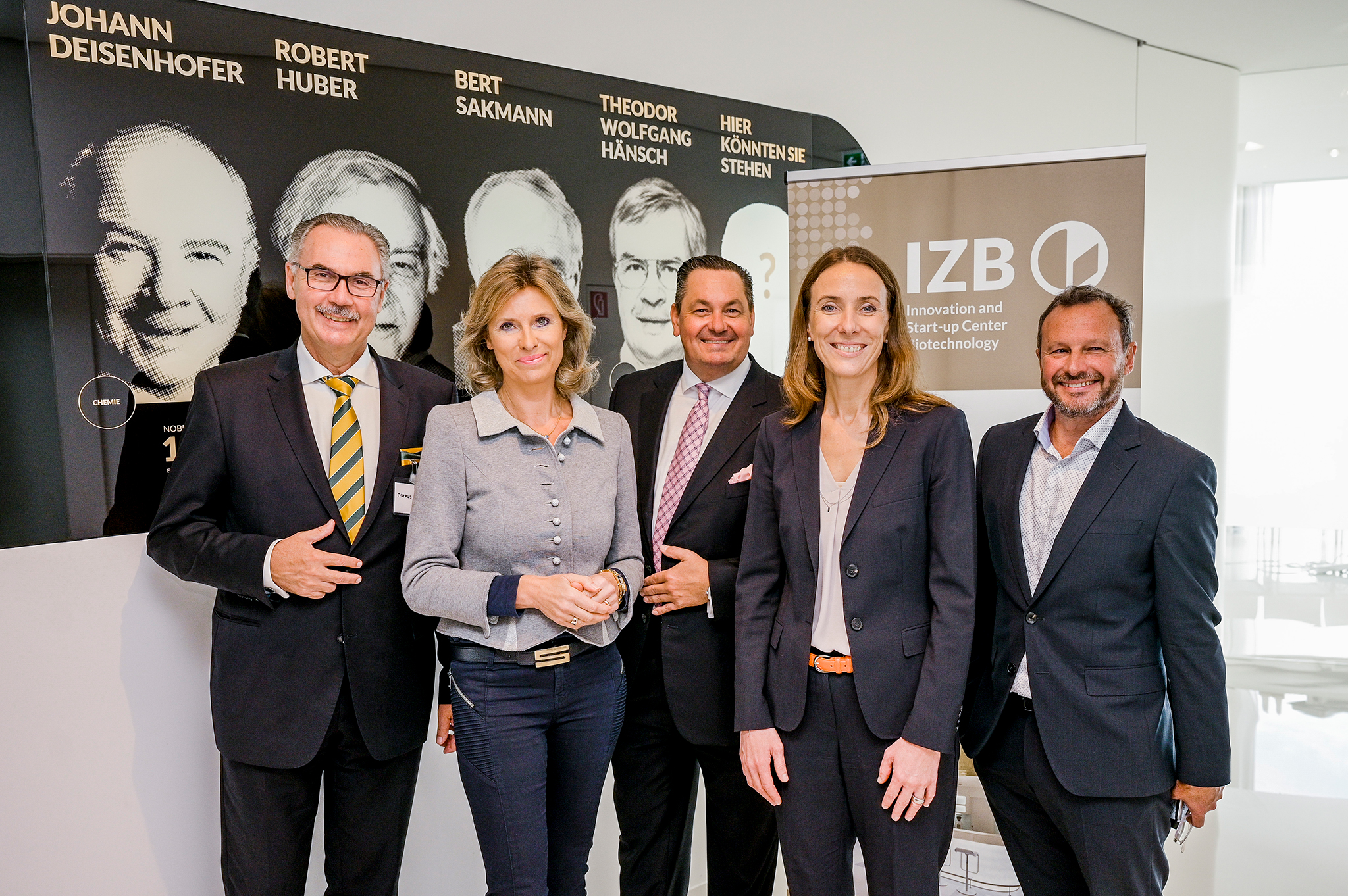
Fotomaterial von der Veranstaltung finden Sie auf unserer Website zum Download: https://www.izb-online.de/mediathek/bildergalerien/
Über Innovations- und Gründerzentrum für Biotechnologie (IZB) in Martinsried bei München
Die Fördergesellschaft IZB mbH, im Jahre 1995 gegründet, ist die Betreibergesellschaft der Innovations- und Gründerzentren für Biotechnologie in Planegg-Martinsried und Freising-Weihenstephan und hat sich zu einem führenden Biotechnologiezentrum entwickelt. Auf 26.000 m2 sind derzeit über 50 Biotechunternehmen mit über 700 Mitarbeitern angesiedelt. Hier wird an der Entwicklung von Medikamenten gegen schwerste Erkrankungen, wie etwa Krebs, Alzheimer und diversen Autoimmunerkrankungen gearbeitet. Ein wesentliches Kriterium für den Erfolg der IZBs ist die räumliche Nähe zur Spitzenforschung auf dem Campus Martinsried/Großhadern bzw. dem Campus Weihenstephan. Auch die neuen Infrastrukturmaßnahmen wie der Faculty Club G2B (Gateway to Biotech), die IZB Residence CAMPUS AT HOME, die Chemieschule Elhardt, die zwei Kindergärten Bio Kids und Bio Kids2 sowie die beiden Restaurants SEVEN AND MORE und The Bowl Food Lounge sind Standortfaktoren, die von den Unternehmensgründern sehr geschätzt werden. Erfolgreiche Unternehmen, die aus dem IZB hervorgegangen sind, sind zum Beispiel die Corimmun (heute Janssen-Cilag), Coriolis, Exosome Diagnostics (gekauft von Bio-Techn), ibidi, Immunic Therapeutics, Medigene, Micromet (heute Amgen), MorphoSys, Octopharma oder Rigontec (heute MSD). Mehr Infos unter www.izb-online.de
Pressekontakt sowie Bildmaterialanfragen:
Susanne Simon, Leitung Presse- und Öffentlichkeitsarbeit
Fördergesellschaft IZB mbH, Innovations- und Gründerzentrum Biotechnologie
Am Klopferspitz 19
D-82152 Planegg-Martinsried
Tel.: +49 (0)89/55 279 48-17
E-Mail: simon@izb-online.de
www.izb-online.de
Prof. Markus M. Lerch, medical director of the LMU Klinikum in Grosshadern, in his talk "Biotechnology and university medicine – an area of tension" emphasized how important it is to him to further develop the outstanding research at the hospital and to be able to provide new therapies for patients. "There is still considerable potential for spin-offs in medicine and for registering, laying claim to, and exploiting inventions and industrial property rights. Munich provides an ideal environment for this, which should be better used strategically," says Lerch. With its 2,000 beds, more than 11,000 employees and almost half a million patients who received outpatient or inpatient treatment in the last year, the LMU Clinic is one of the leading medical centers in Europe. With third-party funding of 134 million EUR in 2021, a cluster of excellence, and as the only German university hospital participating in all eight health research centers of the BMBF, it is also a leader in medical research. While LMU medicine occupies top positions in basic medical research and also in clinical studies (800 in 2021, of which 21 were IITs – Investigator Initiated Study), it has a much more difficult time translating and transferring its research results into applying to patients.
"Over the last 100 years we have gained 30 years of lifespan. How about achieving the next 30 years of gained lifespan in just half as much time," says Chantal Friebertshäuser, Managing Director of MSD Germany." For this we need nothing less than a cultural change at several levels: in the use of digital technologies and data, in prevention, and in being open to new forms of cooperation in new partnerships," Friebertshäuser explained in her presentation: "More gain in lifespan – rethinking digitization, prevention and cooperation".
Cutting-edge research is also urgently needed for the treatment of pathogen-caused cancer. Dr. Greg Fanning, Managing Director of SCG Cell Therapy, explained in his presentation how the start-up is developing a novel immunotherapy for patients with infections and associated cancers. SCG has a strong presence and scientific network in Singapore, China, and Germany. The company develops T-cell therapies, bi-specific antibodies and therapeutic vaccines against hepatitis B virus, Helicobacter pylori and human papillomavirus infections and the associated cancers, which represent a high disease burden worldwide. It is estimated that infectious agents play an etiological role in approximately 20% of cancers worldwide.
About the Innovation and Start-up Center for Biotechnology (IZB) in Martinsried near Munich
The Fördergesellschaft IZB mbH, founded in 1995, operates the Innovation and Start-up Centers for Biotechnology in Planegg-Martinsried and Freising-Weihenstephan and has developed into a leading biotechnology center. More than 50 biotech companies with over 700 employees are currently based on 26,000 m2. Here, work is being done on developing drugs for the most serious diseases, such as cancer, Alzheimer’s and various autoimmune diseases. A key criterion for the success of the IZBs is the physical proximity to cutting-edge research on the Martinsried/Grosshadern campus and the Weihenstephan campus. The new infrastructure measures such as the Faculty Club G2B (Gateway to Biotech), the IZB Residence CAMPUS AT HOME, the Elhardt chemistry college, the two kindergartens Bio Kids and Bio Kids2 as well as the two restaurants SEVEN AND MORE and THE BOWL Food Lounge are also location factors that are highly valued by the founders of the company. Successful companies that emerged from the IZB include Corimmun (today Janssen-Cilag), Coriolis, Exosome Diagnostics (bought by Bio-Techn), ibidi, Immunic Therapeutics, Medigene, Micromet (today Amgen), MorphoSys, Octopharma or Rigontec (now MSD). More information at www.izb-online.de
Press contact and image material requests:
Susanne Simon, Head of Press and Public Relations
Innovation and Start-up Center for Biotechnology (IZB)
Am Klopferspitz 19
D-82152 Planegg-Martinsried
Phone: +49 (0)89/55 279 48-17
Email: simon@izb-online.de
www.izb-online.de

