


CatalYm entwickelt monoklonale Antikörper, die das effektive Eindringen von Immunzellen in die Mikroumgebung von "kalten" (= immunresistenten) Tumoren unterstützen und damit einen hohen medizinischen Bedarf in der Immunonkologie adressieren. CatalYms fortgeschrittenster Antikörper CTL-002 wurde entwickelt, um spezifisch GDF-15, ein vom Tumor produziertes Protein, zu neutralisieren. Hohe GDF-15 Konzentrationen im Serum und der Tumorumgebung helfen dem Tumor, sich dem Immunsystem zu entziehen, und sind mit Resistenzen gegen derzeit verfügbare Therapien verbunden. CTL-002 adressiert gleich drei vom Tumor gesteuerte immunsuppressive Mechanismen, die alle auf der hemmenden Wirkung von GDF-15 auf die immunstimulierende LFA-1/ICAM-1 Interaktion basieren. Durch die Neutralisierung von GDF-15 soll CTL-002 das Eindringen von Immunzellen in den Tumor verstärken, die T-Zellaktivierung durch dendritische Zellen optimieren und die Vernichtung von Tumorzellen durch T- und NK-Zellen verbessern.
CatalYm konnte den Antikörper CTL-002 in weniger als drei Jahren von der wissenschaftlichen Forschung in die klinische Entwicklung bringen. CTL-002 soll als Monotherapie aber auch in Kombination mit zugelassenen PD-1/PD-L1 Antagonisten in Patienten überprüft werden, die nicht auf Checkpoint-Inhibitoren ansprechen.
Dr. Manfred Rüdiger, Geschäftsführer von CatalYm, erklärte: "Diese Finanzierung verbunden mit dem großen Engagement unserer bestehenden und neuen Investoren ermöglichet es uns, CTL-002 bis zum klinischen Proof-of-Concept zu bringen und zu zeigen, dass die Neutralisierung von GDF-15 wichtig für eine wiederhergestellte Immunantwort in einer Vielzahl von Tumortypen ist. Die klinische Entwicklung von CTL-002 soll im Dezember 2020 starten."
Marc Lohrmann, Managing Partner von Vesalius BioCapital III, kommentierte: "Wir freuen uns außerordentlich, CatalYm in dieser Serie-B-Finanzierung zu unterstützen und mit einer bis Ende 2020 startenden first-in-human-Studie ein neues onkologisches Behandlungs-Paradigma zum Patienten zu bringen."
Dr. Holger Reithinger, Aufsichtsratsvorsitzender von CatalYm und General Partner von Forbion, fügte hinzu: "Diese Finanzierungsrunde ist eine Anerkennung des Fortschritts, den das CatalYm Team in den letzten vier Jahren erreicht hat. Als Gründungsinvestor begrüßen wir unsere neuen Partner Vesalius BioCapital III, Novartis Venture Fund, Wachstumsfonds Bayern und coparion, uns gemeinsam bei der klinischen Entwicklung von CTL-002 zu unterstützen."
Das Life-Science Team der Anwaltssozietät Baker McKenzie unter der Leitung von Julia Braun hat CatalYm in allen rechtlichen Aspekten der Serie-B-Finanzierung beraten
Über GDF-15:
GDF-15 ist ein untypisches Mitglied der TGF-beta Familie. Es hält die Immunzellen in Schach, indem es die LFA-1/ICAM-1-Interaktion hemmt. Eine funktionierende LFA-1/ICAM-1-Interaktion ist entscheidend dafür, dass die Immunzellen erfolgreich aus den Gefäßen abwandern und den Tumor durchdringen können. Die LFA-1/ICAM-1-Interaktion ist zusätzlich erforderlich für die Ausbildung von Immun-Synapsen auf den T-Zellen, die von NK-Zellen vermittelte Vernichtung der Tumorzellen und die T-Zellaktivierung durch dendritische Zellen. Hohe GDF-15-Konzentrationen im Serum und der Tumorumgebung helfen dem Tumor, sich dem Immunsystem zu entziehen, und sind mit Resistenzen gegen derzeit verfügbare Therapien verbunden.[i]
Über CTL-002:
CTL-002 ist ein humanisierter, in der Hinge-Region stabilisierter monoklonaler IgG4-Antikörper, der sich gegen den Wachstumsdifferenzierungsfaktor 15 (GDF-15) richtet. GDF-15 ist ein Mitglied der transformierenden Wachstumsfaktor-β-Superfamilie der Zytokine und ist mit einer schlechten Prognose und verringerten Gesamtüberlebensrate bei verschiedenen Tumorarten assoziiert. GDF-15 beeinflusst die Immunsuppression in der Tumormikroumgebung.
Über CatalYm:
Die CatalYm ist ein biopharmazeutisches Unternehmen, das neuartige Krebsimmuntherapien entwickelt, die sich gegen den Wachstums- und Differenzierungsfaktor 15 (GDF-15) richten. Neben seiner bekannten Funktion bei Kachexie wird GDF-15 mit Immunsuppression in Gewebe und Tumoren in Verbindung gebracht. Eine wachsende Anzahl von Publikationen unterstützt das Verständnis, dass GDF-15 einen wichtigen Abwehrmechanismus gegen T-Zellen darstellt. CatalYm versucht durch die Neutralisierung von GDF-15 sogenannte "kalte" Tumore in "heiße" Tumore umzuwandeln und dadurch die Wirksamkeit etablierter Therapien, wie den anti-PD-1/ PD-L1 Checkpoint-Inhibitoren, zu verbessern. Der fortgeschrittenste Produktkandidat des Unternehmens CTL-002, ein neutralisierender Antikörper gegen GDF-15, wird Ende 2020 in die klinische Entwicklung gehen.
Das Unternehmen wurde mit einer Anschubfinanzierung von Forbion und BGV im Jahr 2016 als Ausgründung der Julius-Maximilians-Universität Würzburg und basierend auf den innovativen Forschungsergebnissen von Prof. Dr. Jörg Wischhusen etabliert. CatalYm wird von einem erfahrenen Management-Team mit umfassender Expertise in immunonkologischer Medikamentenentwicklung und Deal-Erfahrung geleitet sowie von internationalen Risikokapitalgebern unterstützt.
CatalYm hat finanzielle Unterstützung auch vom Europäischen Investment Fonds (EIF) via die EIB-EIF Co-investment Fazilität erhalten, die wiederum von der Europäischen Union durch den European Fund für Strategic Investments (EFSI) getragen ist.
Über Vesalius Biocapital III:
Vesalius Biocapital (Vesalius), ein auf Life Sciences spezialisierter Risikokapitalinvestor, unterstützt seit 2007 über Venture-Capital-Fonds Unternehmen, die im Bereich der humanen Gesundheitspflege tätig sind. Seit seiner Gründung hat Vesalius drei Fonds mit einer Gesamtsumme von über EUR 260 Mio. aufgelegt und zur Entwicklung von mehr als 30 Unternehmen beigetragen. Ein Team aus erfahrenen Life-Science-Experten mit Erfahrung in den Bereichen Gesundheitswesen, Unternehmensfinanzierung und Strategieberatung unterstützt die Unternehmen während ihrer Wachstumsphasen. Das in Europa ansässige Team erschließt Investitionsmöglichkeiten und bewertet deren Potenzial für das Portfolio.
Der im April 2017 aufgelegte Vesalius Biocapital III-Fonds wurde im Jahr 2019 mit Einlagezusagen in Höhe von 120 Mio. Euro endgültig geschlossen. Der Fonds richtet sich an europäische Life-Science-Unternehmen mit Projekten in der späten Phase der Entwicklung in den Bereichen Arzneimittel, Medizintechnik, Diagnostik und digitale Gesundheit. Weitere Informationen finden Sie unter: www.vesaliusbiocapital-3.com.
Über Forbion:
Forbion ist eine Risikokapitalgesellschaft im Bereich Life Sciences mit Geschäftsstellen in den Niederlanden, in Deutschland und in Singapur. Forbion investiert in Biotechnologieunternehmen, die im (bio-)pharmazeutischen Bereich aktiv sind. Das Forbion Investmentteam hat seit den späten 1990er Jahren eine beeindruckende Erfolgsbilanz mit erfolgreichen Investitionen in mehr als 66 Unternehmen aufgebaut. Forbion verwaltet auf zehn Fonds verteilt mehr als 1,25 Mrd. Euro. Forbion hat die Prinzipien der Vereinten Nationen für verantwortliche Investitionen unterzeichnet. Neben finanziellen Zielen verfolgt Forbion das Ziel, Investitionen zu tätigen, die sich positiv auf die Gesundheit und das Wohlbefinden der Patienten auswirken. Zu seinen Investoren zählen unter anderem der EIF über dessen Europäisches Konjunkturprogramm (ERP), LfA, Dutch Venture Initiative (DVI), AMUF- und EFSI-Fazilitäten und KfW Capital über das Programm "ERP-Venture Capital-Fondsinvestments". Forbion betreibt außerdem ein Joint Venture mit BGV, einem Unternehmen, das Anschub- und Frühphasenfonds verwaltet, welche speziell auf die Benelux-Länder und auf Deutschland ausgerichtet sind. Weitere Informationen erhalten Sie unter: www.forbion.com.
Über BioGeneration Ventures (BGV):
BGV ist ein auf Life-Sciences spezialisierter Risikokapitalgeber mit Schwerpunkt auf europäische Biotech-Unternehmen in der Frühphase. Durch Investitionen ins Gesundheitswesen und gleichzeitiger Expertise für den Aufbau erstklassiger Teams verfügt BGV über eine starke Erfolgsbilanz mit signifikanten Renditen. Die von BGV verwalteten Fonds investieren in Bereiche, in denen die Wissenschaft, ein hoher medizinischer Bedarf und das Potenzial für einen schnellen und signifikanten Proof-of-Concept zusammenkommen. Zu den erfolgreichen Investitionen gehören Dezima Pharma, Staten Biotechnology und Acerta Pharma. BGV war Gründungsinvestor bei allen drei Unternehmen. Der Verkauf von Acerta Pharma ist der bislang größte Exit mit einem privaten europäischen Biotech-Unternehmen. Seit Gründung hat BGV über 25 Investitionen getätigt. BGV sitzt in Naarden, Niederlande, und arbeitet mit Forbion zusammen. Für mehr Informationen: www.biogenerationventures.com.
Über Novartis Venture Fund (NVF):
NVF ist ein Rendite orientierter Corporate Venture Fund für Life Sciences mit der Zielsetzung Innovationen zu fördern, die Gesundheit von Patienten maßgeblich zu verbessern und überdurchschnittliche Renditen zu erwirtschaften. Dafür gründet und finanziert NVF innovative Life Science-Unternehmen in verschiedenen Entwicklungsphasen. Weitere Informationen finden Sie unter: www.nvfund.com.
Über den Wachstumsfonds Bayern:
Der Wachstumsfonds Bayern wird von der Bayern Kapital GmbH mit Sitz in Landshut verwaltet: Die Bayern Kapital GmbH mit Sitz in Landshut wurde auf Initiative der Bayerischen Staatsregierung 1995 als 100-prozentige Tochtergesellschaft der LfA Förderbank Bayern gegründet. Bayern Kapital stellt als Venture-Capital-Gesellschaft des Freistaats Bayern den Gründern innovativer High-Tech-Unternehmen und jungen, innovativen Technologieunternehmen in Bayern Beteiligungskapital zur Verfügung. Bayern Kapital verwaltet derzeit dreizehn Beteiligungsfonds mit einem Beteiligungsvolumen von rund 500 Millionen Euro. Bislang hat Bayern Kapital rund 330 Millionen Euro Beteiligungskapital in rund 280 innovative technologieorientierte Unternehmen aus verschiedensten Branchen investiert, darunter Life Sciences, Software & IT, Werkstoffe & Neue Materialien, Nanotechnologie sowie Umwelttechnologie. So sind in Bayern über 7.500 Arbeitsplätze dauerhaft in zukunftsfähigen Unternehmen entstanden. www.bayernkapital.de.
Über coparion:
coparion ist ein Venture Capital-Investor für junge, deutsche Technologieunternehmen. Mit einem Fondsvolumen von 275 Millionen Euro trägt coparion signifikant zum schnellen und nachhaltigen Wachstum bei. coparion unterstützt unternehmerischen Weitblick mit Know-how, ohne in das operative Geschäft einzugreifen. Durch die langjährige Erfahrung im Venture Capital und im Aufbau von Unternehmen erkennt das coparion-Team Potenziale und eröffnet neue Perspektiven. coparion finanziert ausschließlich gemeinsam mit Co-Investoren. Der Fokus liegt auf der Startup- und Unternehmen in Frühphase. Pro Unternehmen investiert der Fonds bis zu 10 Millionen Euro, üblicherweise in mehreren Finanzierungsrunden zu je 1-5 Millionen Euro. coparion hat Büros in Köln und Berlin. www.coparion.vc.
Kontakt
CatalYm GmbH
Dr. Manfred Rüdiger, CEO
Am Klopferspitz 19
82152 Martinsried, Planegg
Deutschland
www.catalym.com
info@catalym.com
Medienanfragen
MC Services AG
Katja Arnold, Julia von Hummel, Shaun Brown
T: +49(0)89 2102280
catalym@mc-services.eu
Hintergrundinfos Innovations- und Gründerzentrum für Biotechnologie (IZB) in Martinsried bei München
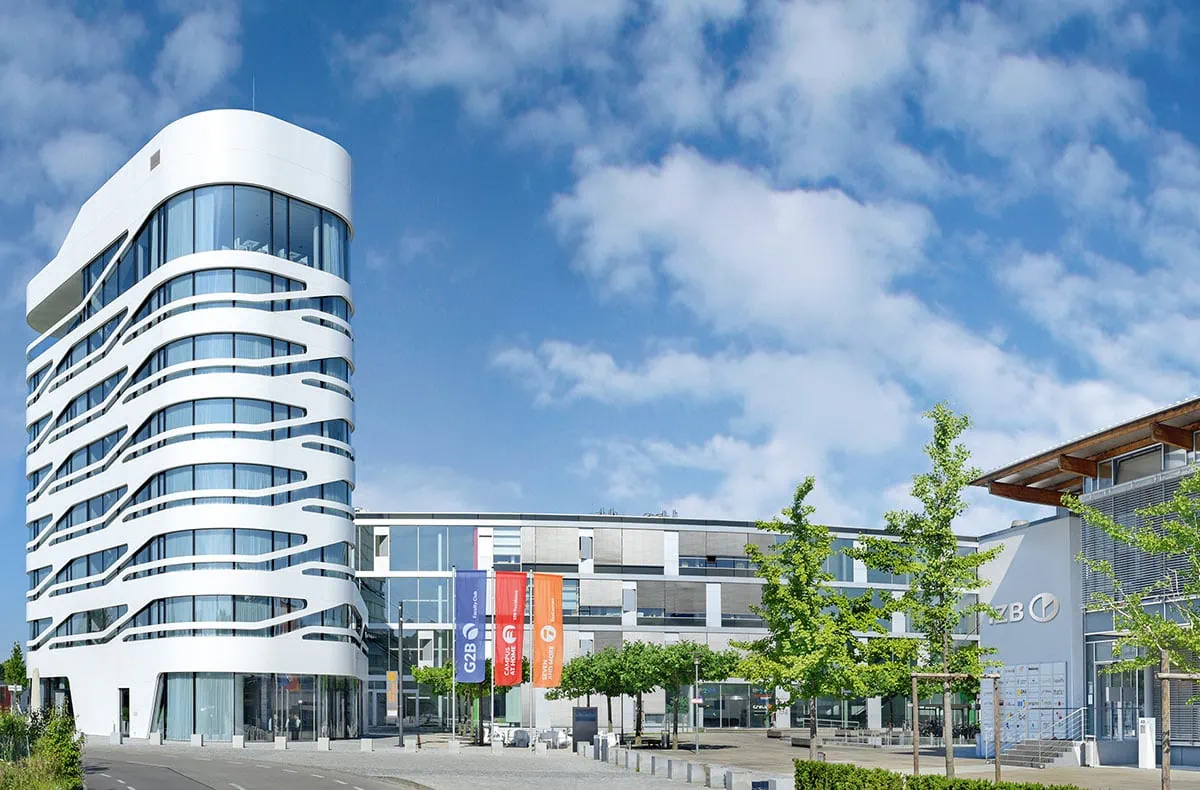
Die Fördergesellschaft IZB mbH, im Jahre 1995 gegründet, ist die Betreibergesellschaft der Innovations- und Gründerzentren für Biotechnologie in Planegg-Martinsried und Freising-Weihenstephan und hat sich zu einem führenden Biotechnologiezentrum entwickelt. Auf 26.000 m2 sind derzeit über 50 Biotechunternehmen mit über 600 Mitarbeitern angesiedelt. Hier wird an der Entwicklung von Medikamenten gegen schwerste Erkrankungen, wie etwa Krebs, Alzheimer und diversen Autoimmunerkrankungen gearbeitet. Im IZB Freising-Weihenstephan – 15 Minuten vom Flughafen entfernt – befassen sich Wissenschaftler mit Entwicklungen im Bereich Life Science. Ein wesentliches Kriterium für den Erfolg der IZBs ist die räumliche Nähe zur Spitzenforschung auf dem Campus Martinsried/Großhadern. Auch die neuen Infrastrukturmaßnahmen wie der Faculty Club G2B (Gateway to Biotech), die IZB Residence CAMPUS AT HOME, die Chemieschule Elhardt, die zwei Kindergärten Bio Kids und Bio Kids2 sowie die beiden Restaurants SEVEN AND MORE und Café Freshmaker sind Standortfaktoren, die von den Entrepreneuren sehr geschätzt werden. Erfolgreiche Unternehmen, die aus dem IZB hervorgegangen sind, sind zum Beispiel die Medigene AG, die Morphosys AG, die Micromet GmbH (heute Amgen AG), Octopharma GmbH und Corimmun (heute Janssen-Cilag). Mehr Infos unter www.izb-online.de
Pressekontakt sowie Bildmaterialanfragen:
Susanne Simon
Leitung Presse- und Öffentlichkeitsarbeit
Fördergesellschaft IZB mbH, Innovations- und Gründerzentrum Biotechnologie
Am Klopferspitz 19, D-82152 Planegg-Martinsried
Tel.: +49 (0)89/55 279 48-17, E-Mail: simon@izb-online.de, Website: www.izb-online.de
Referenzen
Front. Immunol. 11:951. doi: 10.3389/fimmu.2020.00951
CatalYm develops monoclonal antibodies that enhance the effective infiltration of immune cells into the microenvironment of cold tumors, addressing a high unmet medical need in immuno-oncology. CatalYm’s lead molecule CTL-002 was specifically designed to neutralize a tumor-produced protein called GDF-15. High concentrations of GDF-15 in the serum and tumor-microenvironment help the tumor to evade the immune system and are associated with resistance to current therapies. CTL-002 addresses three of the tumor’s immune suppressive mechanisms all involving the inhibitory effect of GDF-15 on the immunostimulatory LFA-1/ICAM-1 interaction. By neutralizing GDF-15, CTL-002 is expected to enhance infiltration of immune cells into the tumor, improve priming of T-cells by dendritic cells and improve the tumor killing by T-cells and NK-cells.
CatalYm has taken this antibody from academia to clinic in under three years. CTL-002 will be developed as a monotherapy and in combination with approved PD-1/PD-L1 antagonists in checkpoint-blocker refractory patients.
Dr. Manfred Ruediger, CEO of CatalYm stated, "This fundraising with the strong commitment of both our existing and new investors allows us to bring CTL-002 to clinical proof-of-concept and to establish that neutralizing GDF-15 is one of the key immune restorative mechanisms in a broad range of tumor types. CTL-002 is set to enter clinical development in December 2020."
Marc Lohrmann, Managing Partner of Vesalius BioCapital III stated: "We are extremely pleased to join CatalYm in this Series B round and to help bring this new oncology treatment paradigm to patients in a first-in-human-study starting before year end 2020."
Dr. Holger Reithinger, Chairman of CatalYm’s Supervisory Board and General Partner at Forbion stated: "This financing is a recognition of the progress achieved by Catalym’s team over the past four years. As founding investor, we welcome our new partners Vesalius BioCapital III, Novartis Venture Fund, Wachstumsfonds Bayern and coparion to join us in supporting the clinical development of CTL-002."
Baker McKenzie served as legal counsel to CatalYm.
About GDF-15
GDF-15, a divergent member of the TGF-beta family, keeps immune cells at bay by blocking a functional LFA-1/ICAM-1 interaction. A functional LFA-1/ICAM-1 interaction is critical for effective immune cell extravasation and tumor infiltration. The LFA-1/ICAM-1 interaction is also essential for formation of the immune synapse in T-cell and NK-cell-based killing as well as in T-cell activation by dendritic cells. High concentrations of GDF-15 in the serum and tumor-microenvironment help the tumor to evade the immune system and are associated with resistance to current therapies.
About CTL-002
CTL-002 is a humanized, hinge-stabilized IgG4 monoclonal antibody targeting Growth Differentiation Factor-15 (GDF-15), a remote member of the transforming growth factor β superfamily of cytokines, that is associated with poor outcome and reduced overall survival in a multitude of cancer types and has been linked to immunosuppression in the tumor microenvironment.
About CatalYm
CatalYm is a biopharmaceutical company developing novel cancer immunotherapies targeting Growth-and-Differentiation Factor 15 (GDF-15). Apart from its established role in cachexia, GDF-15 has been associated with immunosuppression in tissues and tumors and a rapidly growing body of literature supports the concept that GDF-15 is a major T cell repellent. CatalYm aims to neutralize GDF-15 to turn "cold" tumors "hot" and thereby substantially improving the efficacy of established immunotherapy such as anti-PD1/-PD-L1 checkpoint inhibitors. The company’s lead product candidate CTL-002, a neutralizing GDF-15 antibody, is set to enter clinical development in H2 2020.
The Company was founded with initial investments from Forbion and BGV in 2016 as a spin-off from the Julius-Maximilians-University of Würzburg based on the innovative research work of Prof. Dr. Joerg Wischhusen. CatalYm is led by a seasoned senior executive team with substantial IO drug development as well as deal making experience and backed by international venture capital investors.
CatalYm also received financial support from the EIF via the EIB-EIF Co-investment Facility, backed by the European Union through the European Fund for Strategic Investments (EFSI).
About Vesalius Biocapital III
Vesalius Biocapital III is a specialist life sciences venture capital fund and is in line with predecessor funds Vesalius Biocapital I and Vesalius Biocapital II, which have supported life sciences companies since 2007. Vesalius Biocapital I and II raised over EUR 150 million and contributed in the development of over 20 companies.
The investment portfolio is well balanced between drug development, medical device & diagnostics and digital health investments and committed to providing capital to science-backed innovation and ambitious entrepreneurs, with a strong focus on exit within five years.
The specialist team consists of seasoned life science professionals with healthcare industry, corporate finance and strategy consulting experience, supporting companies through their growth cycle. The team is based in Europe and explores investment opportunities and valuation potential for the portfolio.
Vesalius Biocapital III, launched in April 2017, announced a final close with EUR 120 million in commitments. The fund targets later-stage European life science companies in drug development, medtech, diagnostics and digital health. For more information please visit: www.vesaliusbiocapital-3.com.
About Forbion
Forbion is a dedicated life sciences venture capital firm with offices in The Netherlands, Germany and Singapore. Forbion invests in life sciences companies that are active in the (bio-) pharmaceutical space. Forbion’s investment team has built an impressive performance track record since the late nineties with successful investments in over 66 companies. Forbion manages well over EUR 1.25 billion across ten funds. Forbion is a signatory to the United Nations Principles for Responsible Investment. Besides financial objectives, Forbion selects investments that will positively affect the health and well-being of patients. Its investors include the EIF, through its European Recovery Programme (ERP), LfA, Dutch Venture Initiative (DVI), AMUF and EFSI facilities and KfW Capital through the Programme, "ERP – Venture Capital Fondsinvestments". Forbion operates a joint venture with BGV, the manager of seed and early-stage funds, especially focused on Benelux and Germany. For more information, please visit: www.forbion.com.
About BioGeneration Ventures (BGV)
BGV is a specialized life sciences venture capital firm, with a focus on early stage European biotech companies. BGV has a strong track record of significant financial returns through investing in innovations in healthcare and providing the expertise to build world-class teams. BGV manages funds investing in areas where the science, the unmet medical need, and the potential to rapidly demonstrate a significant proof of concept all come together. Successful investments include Dezima Pharma, Staten Biotechnology and Acerta Pharma. BGV was founding investor in all three companies. The Acerta Pharma sale is the largest exit to date of a privately held European biotech company. Since inception BGV has made over twenty-five investments. BGV is based in Naarden, The Netherlands, and collaborates with Forbion. For more information: www.biogenerationventures.com.
About Novartis Venture Fund (NVF)
NVF is a financially driven corporate life science venture fund whose purpose is to foster innovation, drive significant patient benefit and generate superior returns by creating and investing in innovative life science companies at various stages of their development. For more information, go to www.nvfund.com.
About Wachstumsfonds Bayern
Wachstumsfonds Bayern is managed by Bayern Kapital GmbH, based in Landshut, Germany, the venture capital organisation of the State of Bavaria: Bayern Kapital provides equity capital financing for the founders of young innovative technology companies in Bavaria; presently a total volume of around EUR 500million are managed. So far, it has invested roughly EUR330 million in about 280 innovative companies in the fields of technology in various sectors including life science, software & IT, medical technology, materials and new materials, nanotechnology and environmental technology. For more information: www.bayernkapital.de.
About coparion
coparion provides venture capital to accelerate momentum and growth. With a current active fund of EUR 275 million coparion has the means to do so. coparion supports entrepreneurial vision with know-how, but without intervening in daily business operations. Thanks to in-depth experience in venture capital and in building companies, the coparion team discerns potentials and opens up new perspectives. coparion only invests with co-investors. The fund invests up to EUR 10 million per company, usually in several financing rounds of EUR 1-5 million each. Investment focus is on German companies in the start-up and early growth phase. coparion is based in Cologne and Berlin. www.coparion.vc.
Contact
CatalYm GmbH
Dr. Manfred Rüdiger, CEO
Am Klopferspitz 19
82152 Martinsried, Planegg
Germany
www.catalym.com
info@catalym.com
Media Inquiries
MC Services AG
Katja Arnold, Julia von Hummel, Shaun Brown
T: +49(0)89 2102280
catalym@mc-services.eu
About the Innovation and Start-up Center Biotechnology (IZB):
The company IZB mbH, founded in 1995, is the operating company of the Innovation and Start-Up Centers for Biotechnology in Planegg-Martinsried and Freising-Weihenstephan, and has developed into one of the top ten renowned biotechnology centers in the world. More than 50 biotech companies with more than 600 employees are currently located on an area covering 26,000 m2. This is where work focuses on developing drugs against the most severe diseases such as cancer, Alzheimer’s disease and various autoimmune diseases – and there are already many successes. At the IZB Freising-Weihenstephan – 15 minutes from the airport – scientists are working on developments in the field of life sciences. An essential criterion for the success of the IZBs is the proximity to top research on the Martinsried/Grosshadern Campus. The new infrastructure measures, such as the Faculty Club G2B (Gateway to Biotech), the IZB Residence CAMPUS AT HOME, the Chemistry College Elhardt, the two kindergartens BioKids and BioKids2, as well as the two restaurants SEVEN AND MORE and Café Freshmaker, have become decisive location factors. Successful companies that have emerged from the IZB include, for example, Medigene AG, Morphosys AG, Micromet GmbH (now Amgen AG), Octopharma GmbH and Corimmun (today Janssen-Cilag). More information atwww.izb-online.de
Press contact IZB:
Susanne Simon, Head of Public Relations
Innovation and Start-ups Center Biotechnology
Am Klopferspitz 19, D-82152 Planegg-Martinsried near Munich
Tel.: +49 (0)89/55 279 48-17, Fax: +49 (0)89/55 279 48-29
E-Mail: simon@izb-online.de
Website: www.izb-online.de

