


What does Twogee do, in simple terms?
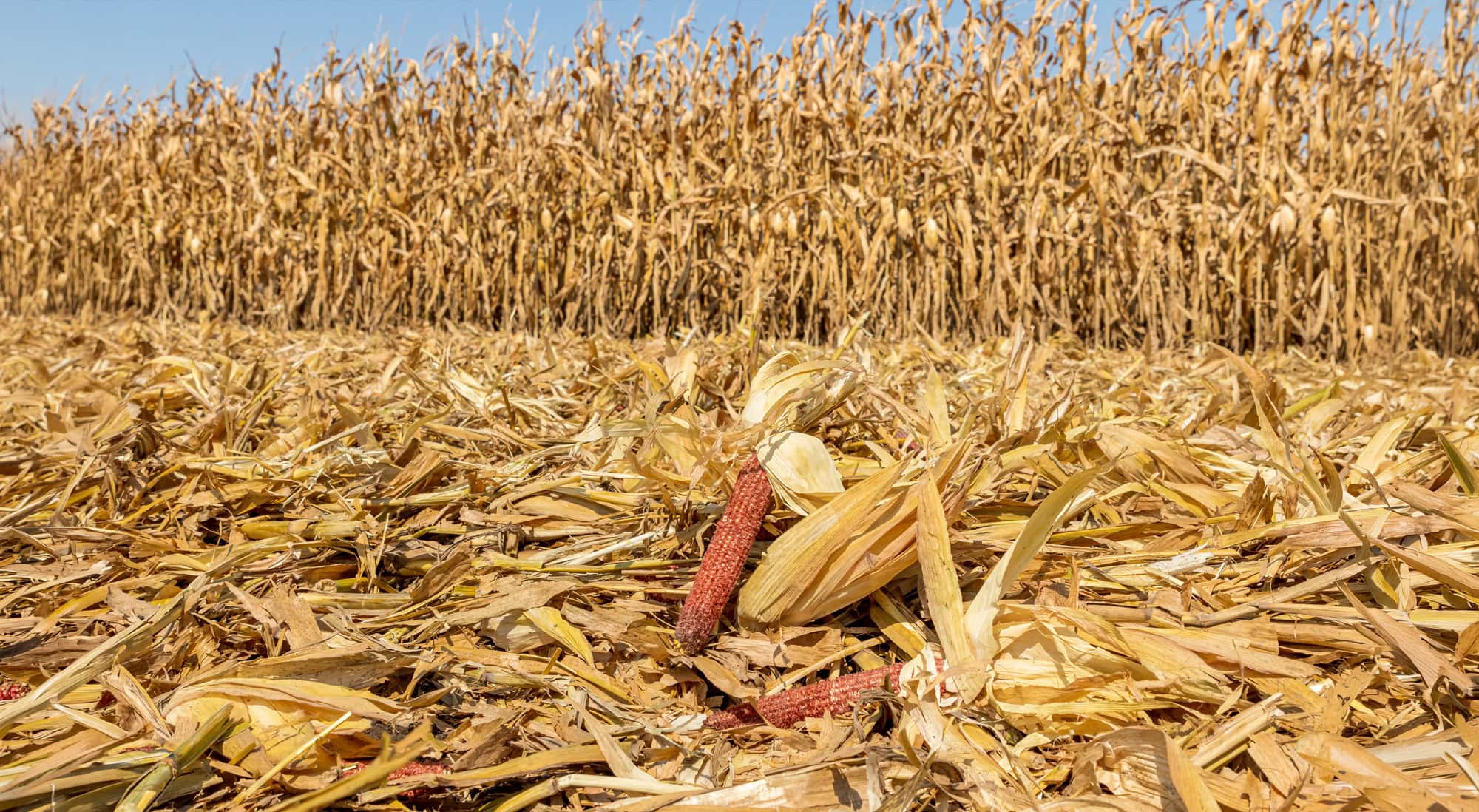
Essentially, we bring two worlds together: On one side, there are large quantities of biological residues that today are mostly incinerated or used in biogas plants – meaning they are used for energy, but not as material feedstocks. On the other side, modern chemistry and biotechnology need large amounts of sugar as a raw material, which so far has mainly come from food or feed crops, so-called 1G raw materials. We help connect these two worlds with an economically viable solution.
To do this, we use special enzymes that work much like scissors. They precisely cut the biomass into its individual building blocks, releasing sugars that were previously bound within the fibres and were therefore not available to humans or animals. These so-called 2G sugars do not come from food-based sources, but rather from waste materials, and can be reused as sustainable commodities in industry. We have a large portfolio of different „scissors“ and use a fungus as our production system, which we can modify to cost-effectively produce exactly the right enzyme cocktail. The key is that everything is precisely tailored to the respective waste materials and operates at an industrially viable scale. Our products are biomass-specific enzyme solutions that we license to our customers for the conversion of their biomass into 2G sugar and other sustainable chemicals.
Which waste materials do you focus on most?
We don’t focus so much on the industry itself, but rather on two key factors: quantity and economic viability. The material must be available in sufficient amounts and ideally generated consistently throughout the year, so that storage is unnecessary. Our focus is on fibrous waste materials, such as agricultural husks, wood and paper waste, or by-products from food production like brewers’ grains or bran. The business case is always the deciding factor: what is the current and potential value of the material? Do you have to pay to get rid of it, or do you already earn something from it? Whether our approach is worthwhile for a company depends on the value added through the conversion to 2G sugar.
Where does Twogee stand today in the development of its platform?
Technically, we are already very advanced. Although we started from scratch and didn’t bring any technology from our previous employer, we were able to build our processes and products very quickly and efficiently thanks to our in-depth expertise and more than 10 years of industry experience each in related fields. Now our focus is clearly on client projects and product development.
Do you already have your first customers?
We are already working with three clients on specific solutions: in the agricultural sector, the pulp industry, and the waste management sector. These projects are of central importance to us because we are already generating initial revenue from them and will soon move into concrete product development.
What does Twogee do, in simple terms?
Essentially, we bring two worlds together: On one side, there are large quantities of biological residues that today are mostly incinerated or used in biogas plants – meaning they are used for energy, but not as material feedstocks. On the other side, modern chemistry and biotechnology need large amounts of sugar as a raw material, which so far has mainly come from food or feed crops, so-called 1G raw materials. We help connect these two worlds with an economically viable solution.
To do this, we use special enzymes that work much like scissors. They precisely cut the biomass into its individual building blocks, releasing sugars that were previously bound within the fibres and were therefore not available to humans or animals. These so-called 2G sugars do not come from food-based sources, but rather from waste materials, and can be reused as sustainable commodities in industry. We have a large portfolio of different “scissors” and use a fungus as our production system, which we can modify to cost-effectively produce exactly the right enzyme cocktail. The key is that everything is precisely tailored to the respective waste materials and operates at an industrially viable scale. Our products are biomass-specific enzyme solutions that we license to our customers for the conversion of their biomass into 2G sugar and other sustainable chemicals.
Which waste materials do you focus on most?
We don’t focus so much on the industry itself, but rather on two key factors: quantity and economic viability. The material must be available in sufficient amounts and ideally generated consistently throughout the year, so that storage is unnecessary. Our focus is on fibrous waste materials, such as agricultural husks, wood and paper waste, or by-products from food production like brewers’ grains or bran. The business case is always the deciding factor: what is the current and potential value of the material? Do you have to pay to get rid of it, or do you already earn something from it? Whether our approach is worthwhile for a company depends on the value added through the conversion to 2G sugar.
Where does Twogee stand today in the development of its platform?
Technically, we are already very advanced. Although we started from scratch and didn’t bring any technology from our previous employer, we were able to build our processes and products very quickly and efficiently thanks to our in-depth expertise and more than 10 years of industry experience each in related fields. Now our focus is clearly on client projects and product development.
Do you already have your first customers?
We are already working with three clients on specific solutions: in the agricultural sector, the pulp industry, and the waste management sector. These projects are of central importance to us because we are already generating initial revenue from them and will soon move into concrete product development.
What are the next steps?
We are planning a Series A funding round from mid- to late 2027. With this, we aim to expand our operations and, in the long term, grow internationally. Regions with abundant biomass, such as South America or parts of Asia, are particularly exciting for us. We have already established initial contacts there and are assessing where we can move forward with implementation most quickly.
What role can your technology play in the development of a true circular economy?
We see ourselves as enablers across the entire value chain. The basic idea isn’t entirely new from a technological standpoint, but we’re making it economically viable in a way that’s virtually unheard of today. To achieve this, we’re addressing one of the biggest cost drivers in bioconversion on the process side: enzymes. Many bioconversion or biorefinery concepts work technically but fail due to costs, because existing enzyme solutions are too expensive, too non-specific, or not efficient enough. This is exactly where we come in with our tailor-made enzyme cocktails, which can be produced cost-effectively on-site and tailored to the specific waste material. This transforms a technically feasible process into an economically viable model.
At the same time, we bring together the various stakeholders, from waste material producers to buyers of 2G sugars and basic chemicals. For us, the key factor is that the entire system must be economically viable, independent of government subsidies and specific regions. Only then can such a concept establish itself in the long term and scale up industrially.
What are the next steps?
We are planning a Series A funding round from mid- to late 2027. With this, we aim to expand our operations and, in the long term, grow internationally. Regions with abundant biomass, such as South America or parts of Asia, are particularly exciting for us. We have already established initial contacts there and are assessing where we can move forward with implementation most quickly.
What role can your technology play in the development of a true circular economy?
We see ourselves as enablers across the entire value chain. The basic idea isn’t entirely new from a technological standpoint, but we’re making it economically viable in a way that’s virtually unheard of today. To achieve this, we’re addressing one of the biggest cost drivers in bioconversion on the process side: enzymes. Many bioconversion or biorefinery concepts work technically but fail due to costs, because existing enzyme solutions are too expensive, too non-specific, or not efficient enough. This is exactly where we come in with our tailor-made enzyme cocktails, which can be produced cost-effectively on-site and tailored to the specific waste material. This transforms a technically feasible process into an economically viable model.
At the same time, we bring together the various stakeholders, from waste material producers to buyers of 2G sugars and basic chemicals. For us, the key factor is that the entire system must be economically viable, independent of government subsidies and specific regions. Only then can such a concept establish itself in the long term and scale up industrially.
Finally: Where do you see Twogee in five to ten years – and what advice would you give to other founders?
We see ourselves as a key technology provider driving the bioeconomy. With our tailored enzyme cocktails and technology licensing, we aim to enable the economic conversion of waste materials into sustainable basic chemicals. If we succeed at an industrial scale, we can make a real contribution to the transformation toward sustainable chemistry and biotechnology – worldwide.
What we’ve learned along the way is that, as scientists, you first need to understand how business works. How do you build a business case? How do you explain your work to people outside your field? How do you actually found a company, and what options are available? We made some mistakes in the beginning. Programs like UnternehmerTUM or the MAxL Incubator were incredibly valuable for us as they bridge exactly this gap. There, we learned how to set up a business model and how to engage with potential investors. Our advice to future founders is therefore: take full advantage of these programs, ask questions, and actively tap into the mentors’ network. If you reach out proactively, you’ll gain an incredible amount of valuable support.
Finally: Where do you see Twogee in five to ten years – and what advice would you give to other founders?
We see ourselves as a key technology provider driving the bioeconomy. With our tailored enzyme cocktails and technology licensing, we aim to enable the economic conversion of waste materials into sustainable basic chemicals. If we succeed at an industrial scale, we can make a real contribution to the transformation toward sustainable chemistry and biotechnology – worldwide.
What we’ve learned along the way is that, as scientists, you first need to understand how business works. How do you build a business case? How do you explain your work to people outside your field? How do you actually found a company, and what options are available? We made some mistakes in the beginning. Programs like UnternehmerTUM or the MAxL Incubator were incredibly valuable for us as they bridge exactly this gap. There, we learned how to set up a business model and how to engage with potential investors. Our advice to future founders is therefore: take full advantage of these programs, ask questions, and actively tap into the mentors’ network. If you reach out proactively, you’ll gain an incredible amount of valuable support.