Employment peak
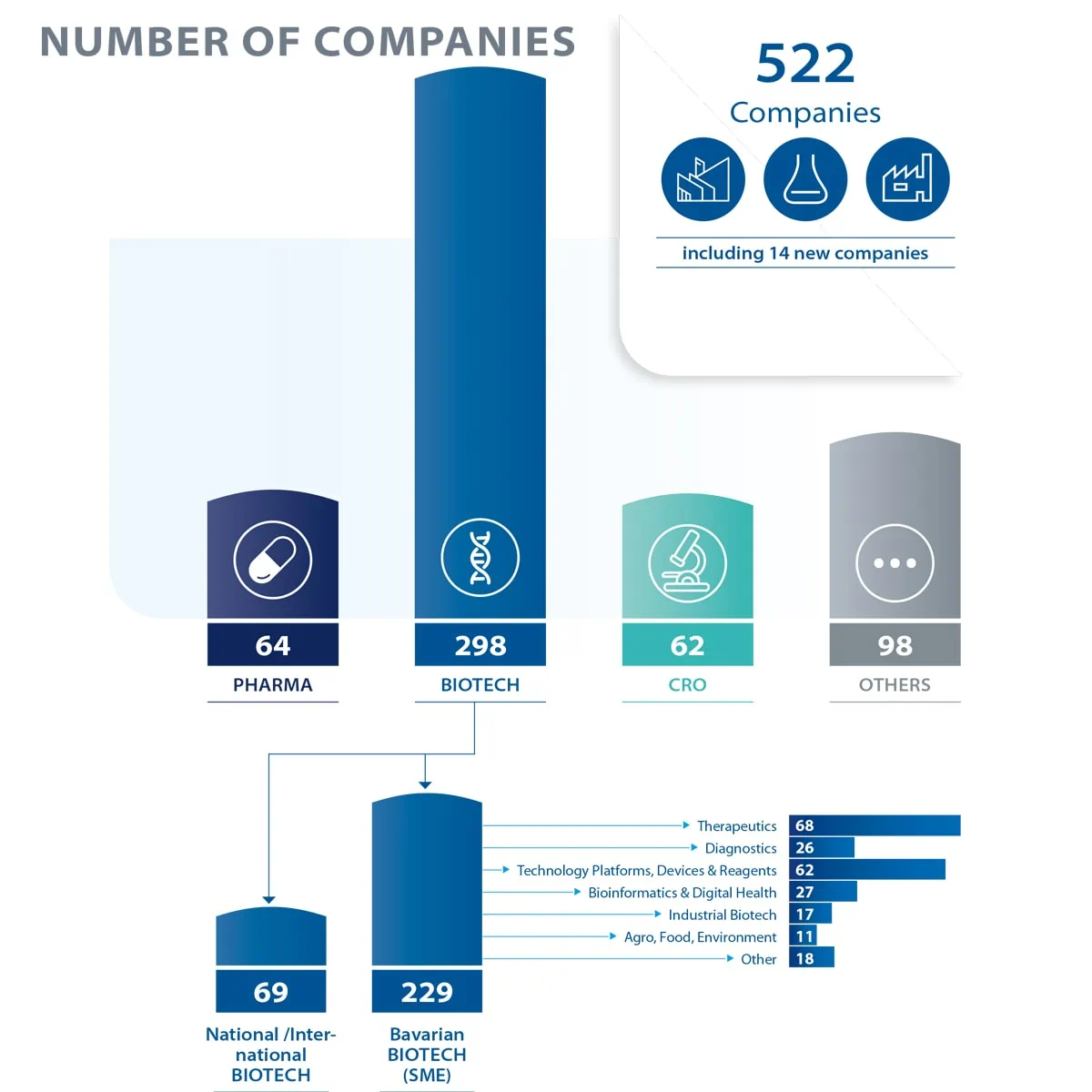
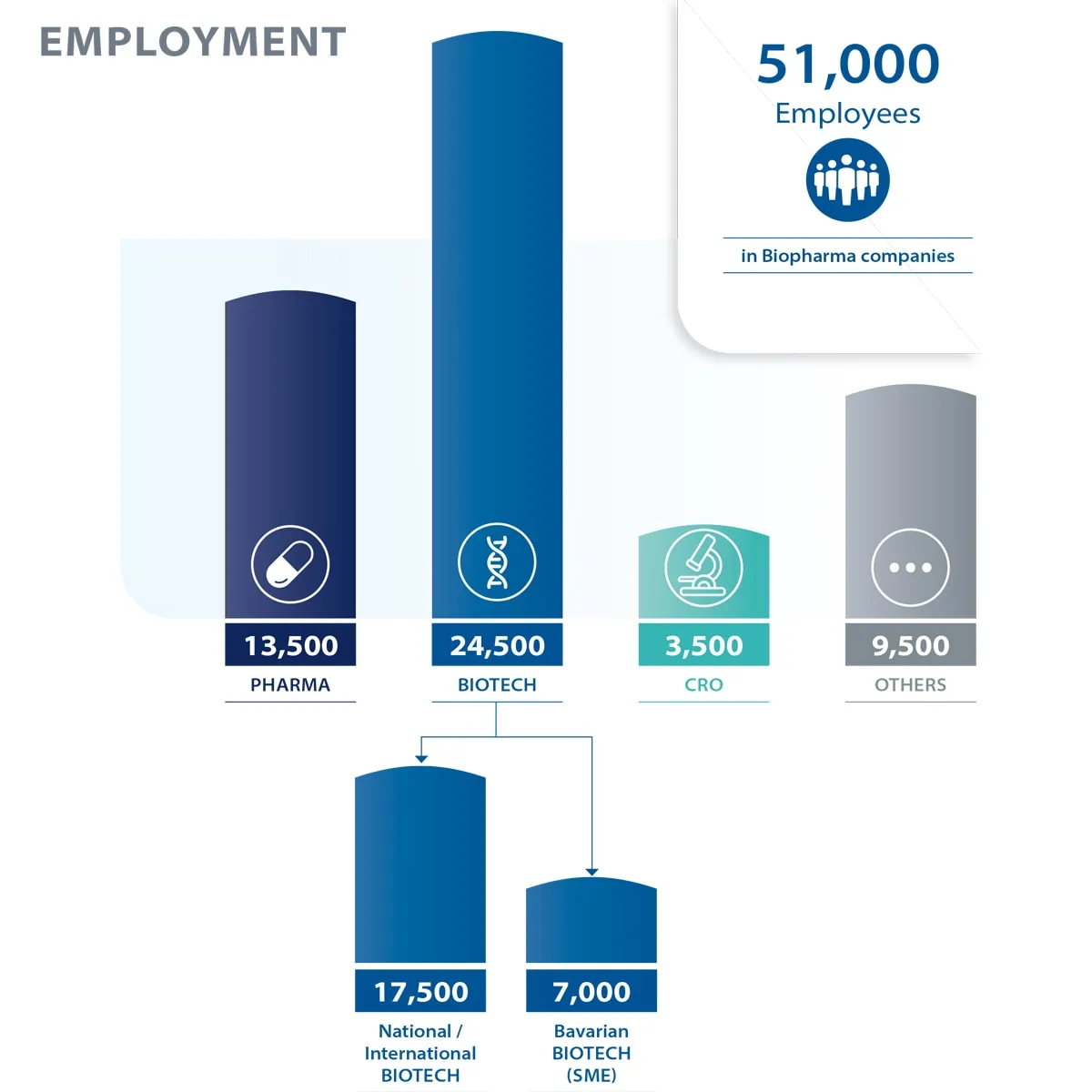
Together, the pharmaceutical, biotech and other companies in the sector employ around 51,000 people in Bavaria. With a total of 24,500 employees, the 298 (+3%) biotech companies are the most important employers in the sector. This corresponds to an increase of 2,500 employees compared to the previous year. National and international companies employed a total of 17,500 people at their Bavarian sites, an increase of 16.5%. Small and medium-sized Bavarian biotech companies remained stable with a total of 7,000 employees.
Strong start-up momentum, newly established companies above the national average
Bavaria continues to be particularly distinguished by its startup-friendly ecosystem. In 2022, a total of 14 new companies were added – 11 of which were newly founded. The number of start-ups puts Bavaria at the top of the list in Germany and above the national average. In the region, start-ups find a strong network of supporting organizations. With the virtual incubator inQlab, BioM was able to help a large number of teams to successful start-ups. BioM will intensify its support for spin-offs with its physical incubator Munich Accelerator for Life Sciences & Medicine (MAxL) starting in 2024. The Bavarian Ministry of Economic Affairs is funding this project with 8.5 million euros.
Funding climate and investment in new research infrastructure
The global crises are also having a particularly strong impact on start-ups and smaller companies that rely on external support from investors. Despite the currently subdued investor market, Bavarian companies have succeeded in raising considerable sums and closing some major deals. In total, the funds raised in 2022 amounted to more than 350 million euros. Tubulis, ITM, CatalYm and Ethris were particularly successful with their financing rounds in the double-digit million range. Both Immunic and Vivoryon raised significant funds via share placements. Heavy investments are being made in new research infrastructures. The Roche Group is investing up to 250 million euros in its new diagnostics research building at the Penzberg site. In addition, the first laboratories of the Fraunhofer Institute for Immunology, Infection and Pandemic Research were opened in Penzberg. The 9,200 m2 Life Science Center in Gräfelfing will provide state-of-the-art laboratory and office space for some 400 biotech scientists in 2023. The WACKER Group is investing a double-digit million euro sum in the construction of a biotechnology center and aims to raise industrial biotechnology research to a top international level by founding the TUM WACKER Institute for Industrial Biotechnology. Ludwig-Maximilians-Universität München (LMU) is expanding its Großhadern/Martinsried campus with ICON, for research into cardiovascular diseases, and DIAG for diagnostics at the Max von Pettenkofer Institute for Bacteriology and Virology.
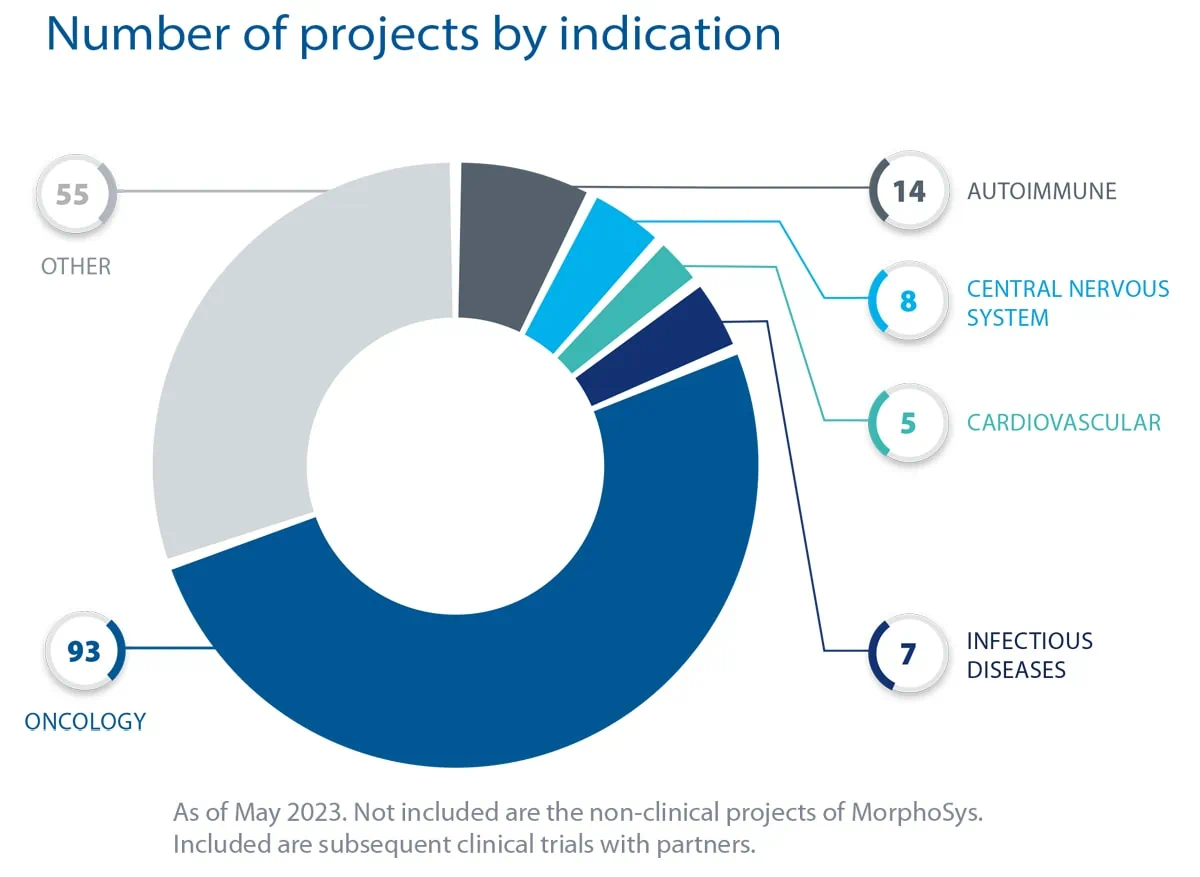
Oncology remains most important indication in drug development
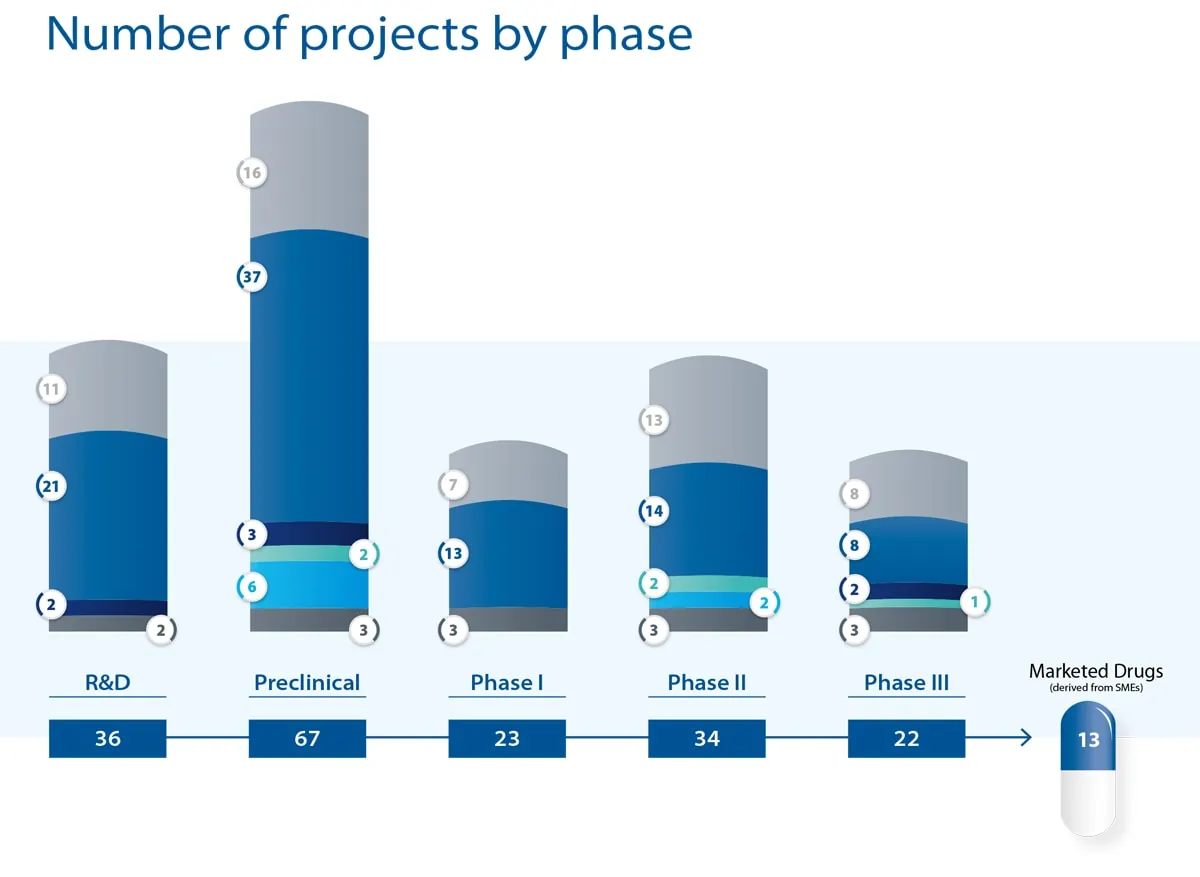
The Bavarian biotech landscape is traditionally strongly characterized by drug development. These are long-term research and development projects that proceed from the initial identification of a drug candidate through preclinical and clinical studies in a lengthy process to approval. A whole series of R&D projects have been advanced and are now in the preclinical phase (67). In contrast, the total number of projects in clinical phases I to III has decreased to 79. A total of 23 products are currently in clinical phase I, 34 in phase II and 22 in phase III. As in previous years, cancer therapeutics account for the largest proportion of compounds in clinical development (35). Therapeutics for autoimmune diseases follow with 9 projects. As in Germany, the product pipeline in Bavaria is dominated by biopharmaceuticals and here by the active substance group of recombinant antibodies.