





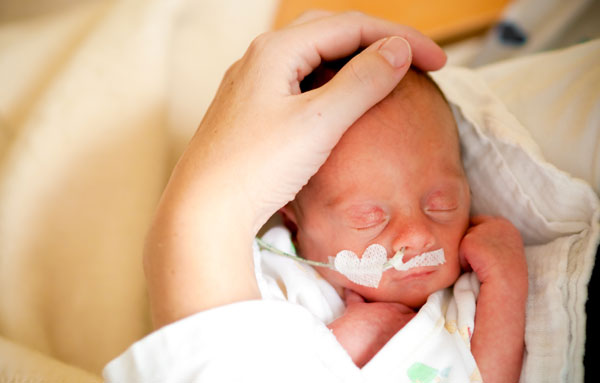
Not yet ready for this world: Every year, thousands of babies in Germany are born many weeks too early and often have to struggle for months. Their chances of survival have continuously improved over recent decades. Hardly any infant born before the 28th week of pregnancy survived just a few decades ago, whereas babies are now considered potentially viable from the 23rd week on. However, there is a high risk of infections with life-threatening complications, and sepsis is one of the most common causes of death.
“The threat of infection is particularly high in very small premature babies,” says LMU physician Prof. Markus Sperandio. “For them, a bacterial infection can lead to death within hours. For this reason, they often have to be treated with antibiotics.” Before switching to a career in research, the physiologist and former pediatrician and neonatologist worked at Heidelberg Children’s Hospital for eight years. During that time, he often was confronted with the susceptibility of premature babies to infection and this problem never left his mind ever since. As such, it is no coincidence that he and his team are investigating precisely this subject at LMU’s Biomedical Center.

Marchioninistraße 15
81377 München
Deutschland
claudia.berg@med.uni-muenchen.dewww.klinikum.uni-muenchen.de